
AWS Certified Developer – Associate (DVA-C02): Worth It for AI-Focused IT Pros?
AWS Certified Developer – Associate is not an AI certification. That distinction matters. It validates application development on AWS, while AI-focused IT work still depends on the surrounding skills: APIs, identity, event-driven services, observability, deployment, and cost control.
For an IT professional moving from endpoint or infrastructure support into AI application operations, that makes DVA-C02 a useful adjacent credential—provided you use it to demonstrate working software, not just memorized AWS service names.
Quick verdict
| Category | Assessment |
|---|---|
| Provider | AWS |
| Exam | DVA-C02 |
| Best fit | IT pros moving toward cloud application support, automation, or AI integrations |
| AI relevance | Indirect but practical |
| Main strength | Proves developer-side AWS fluency around real application plumbing |
| Main limitation | Does not validate model selection, ML engineering, or responsible-AI depth |
| Recommendation | Worth it when paired with an AI workload or automation portfolio project |
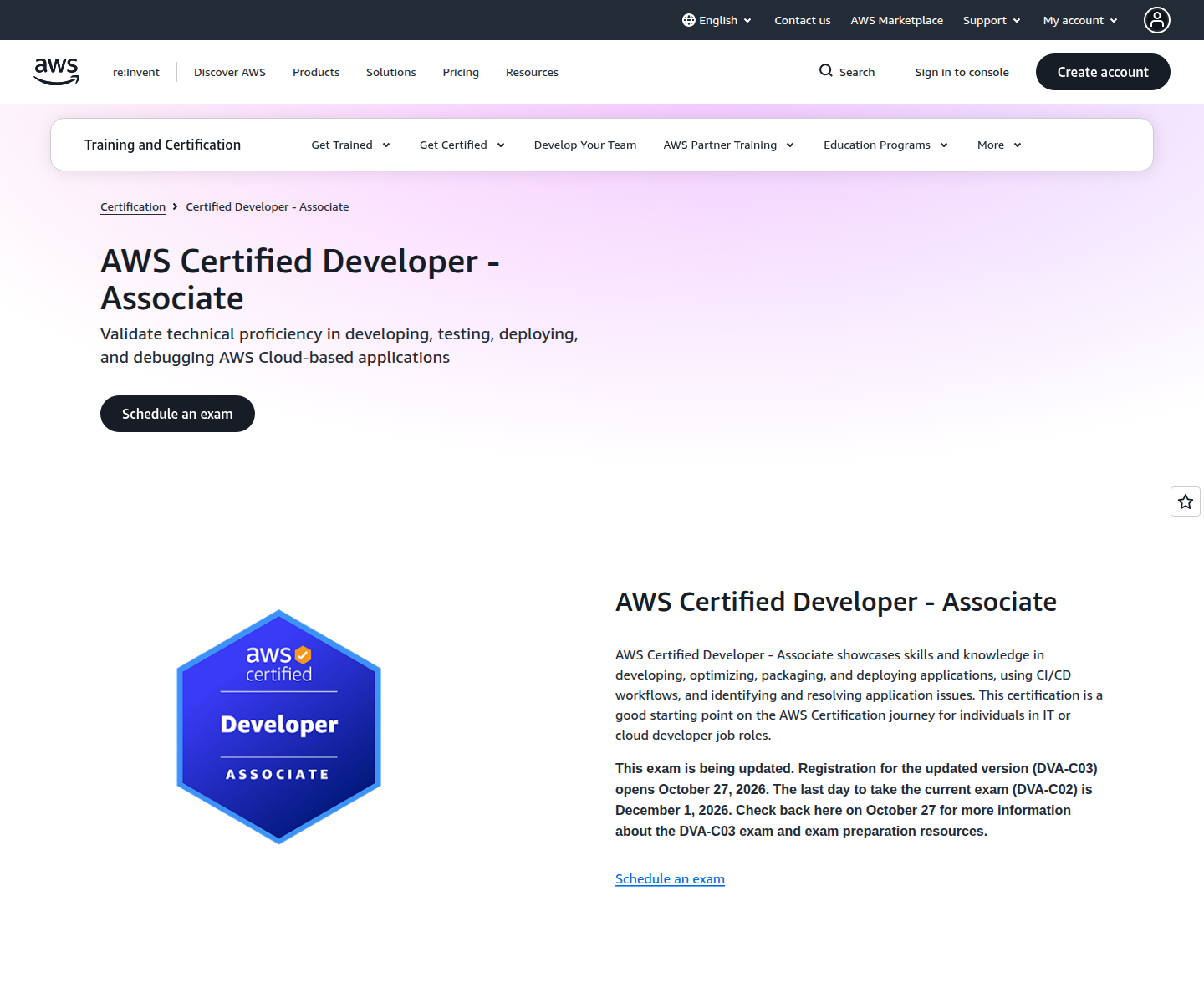
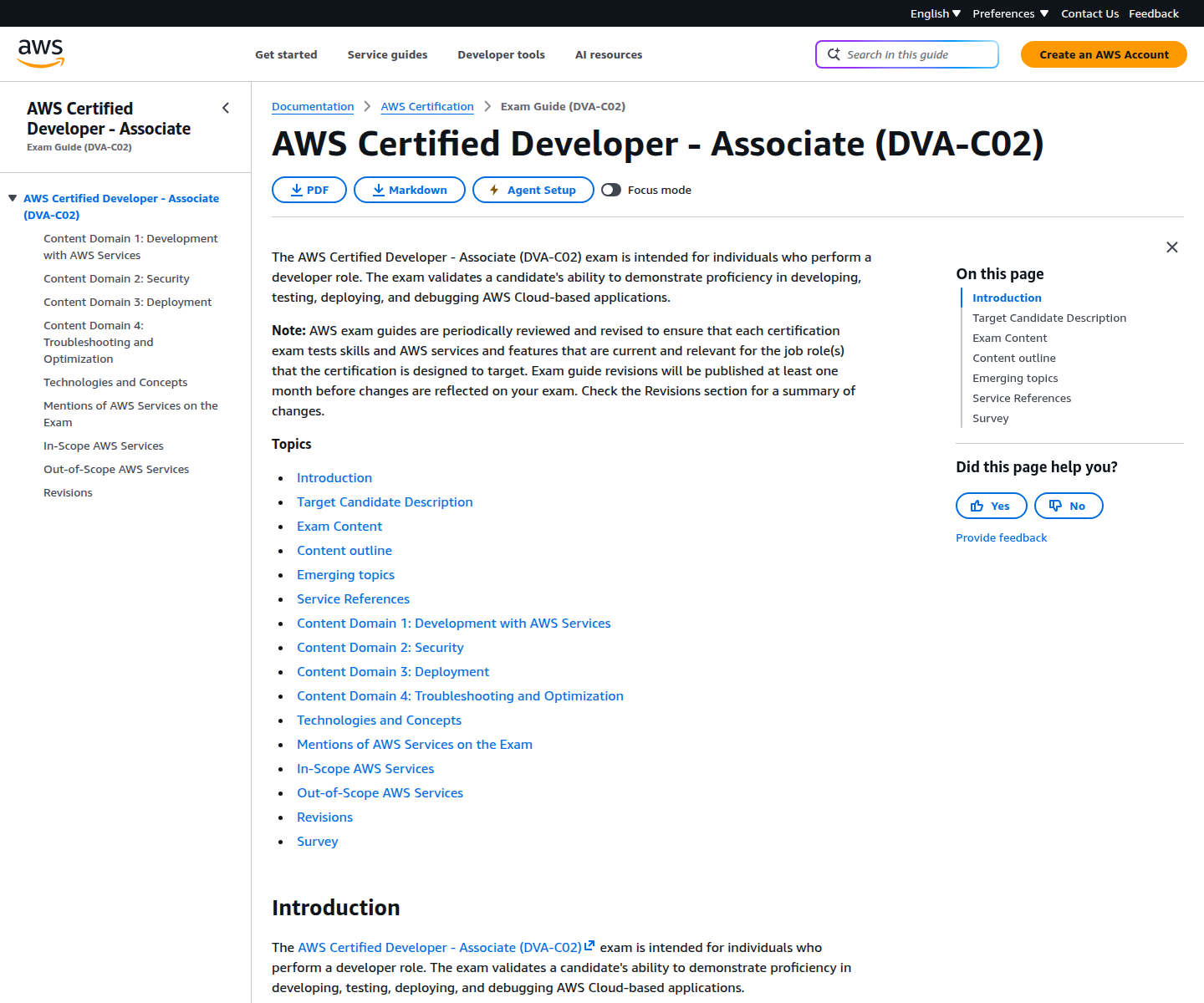
Official sources: AWS certification page and AWS official exam guide.
What DVA-C02 proves
AWS positions this certification around developing and maintaining applications on AWS. The official exam page emphasizes application development, deployment, debugging, and use of core AWS services through code and APIs.
That is the layer many AI projects quietly depend on. A retrieval-augmented application still needs an authenticated API, secrets handling, data movement, logging, retries, deployment automation, and a reliable way to expose the result to users. DVA-C02 is aimed at that application layer—not at training a foundation model.
The official exam guide is the better source for the current scope. Use it to confirm the tested services and task statements before booking, because AWS can revise exam content and weighting.
Why it can matter for AI-focused IT professionals
AI adoption turns ordinary IT responsibilities into application-platform responsibilities. Teams need people who can:
- connect an internal tool to an AI service through an authenticated API;
- deploy a small service without putting credentials in source code;
- use queues, events, and retries when inference calls are slow or intermittent;
- monitor latency, failures, permissions, and spend;
- package a proof of concept so another administrator can operate it.
DVA-C02 gives you a structured way to learn those fundamentals in an AWS context. It is especially relevant for cloud support engineers, automation engineers, DevOps-adjacent administrators, and systems professionals who are becoming the operational owner of AI-enabled internal tools.
It is less relevant if your goal is model training, feature engineering, prompt evaluation, or data science. For those goals, an AWS machine-learning credential or a demonstrable ML portfolio is a better signal.
What to study beyond the exam outline
Do not prepare by reading service definitions in isolation. Build a small, complete application while studying:
- Put a thin API in front of an AI or text-processing workflow.
- Store configuration and secrets using AWS-native controls rather than hard-coded values.
- Add an asynchronous path with a queue or event notification.
- Log request IDs, latency, errors, and user-visible failures.
- Deploy the application through a repeatable process and document rollback.
- Add least-privilege permissions and a basic cost review.
That project turns DVA-C02 from a generic developer badge into evidence that you can support the integration layer around AI systems.
DVA-C02 versus an AI-specific certification
An AI-specific certification answers, “Do you understand AI concepts, use cases, or ML workflows?” DVA-C02 answers, “Can you build and operate applications on AWS?” Those are different questions.
Choose an AI-focused credential first if you need foundational AI vocabulary, model lifecycle knowledge, or cloud AI service coverage. Choose DVA-C02 first if your immediate work is shipping integrations, automations, APIs, and backend services that happen to include AI.
For a Microsoft-first desktop engineer, DVA-C02 also has a higher switching cost than a Microsoft credential because the platform vocabulary and service model are different. The payoff is broader cloud portability and a stronger application-development foundation.
Who should skip it
Skip or delay DVA-C02 when:
- you want a certification explicitly named for AI or machine learning;
- your current role has no access to code, APIs, or cloud deployments;
- you are not prepared to build at least one working AWS application;
- a role-specific Microsoft, Google Cloud, or data-platform credential is the hiring requirement;
- you are choosing it only because it contains “developer” and AI is popular.
A certificate cannot replace evidence that you can secure, deploy, monitor, and troubleshoot a real workflow.
Bottom line
AWS Certified Developer – Associate is a credible bridge credential for IT professionals moving toward AI application operations. It is not proof of AI engineering ability, and it should not be marketed that way.
Take it when your next career step involves building or supporting the cloud software around AI: authenticated services, automation, deployment, events, observability, and operational reliability. Pair the certification with a small AI-enabled application and a short architecture write-up. That combination is more useful than the badge alone.
Provider facts checked against AWS on September 20, 2026. Exam availability, scope, and pricing can change; verify the official pages before registering.